Friday, May 1, 2020

TYSG: Pandemic Edition, Round 2

Salut!

I wanted to offer a follow-up to my recent TYSG update!

Last time, I discussed the difference between pain and suffering: pain being in profound abundance at the moment and not in our control, and suffering being an unskillful reaction to pain that worsens it but is within our control.

In brief, the moral of my last post is that our task, as much as we are able, is to NOT do suffering.

Under these particular circumstances, this will take some creativity.  That is for several reasons:
--Almost none of us are accustomed to coping with this level of pain, so we are inexperienced with this task,
--Being in more pain than usual depletes our energy and resilience, making it more difficult to do the work of coping effectively, and
--Due to the nature of the pandemic, many/most of the resources we would normally use to cope are not available to us, and will be unavailable indefinitely.

All of this sucks.  It is in and of itself yet another source of pain.  However, it would be doing suffering to throw our hands up and declare ourselves powerless to change how we feel or to take care of ourselves.

One very small way in which I've been trying to get myself to NOT do suffering arose from my realization that, early on, it felt like all I was doing all the time was either thinking about the pandemic or talking about the pandemic.  Going on social media in an attempt to find some diversion from the pandemic only revealed that literally every single corner of the internet seemed to be incapable of focusing on anything but the pandemic.  It felt like there was absolutely no reprieve from being constantly bombarded from within and without with it.

I wondered: what would it take to purposefully think about something else?

In answer to this question, I had the simple but mercifully somewhat effective idea of coming up with conversation-starter questions.  I've been posting them to social media and sharing them in a family group chat daily since the night after I came up with the idea and Husband and I came up with a bunch of options.

Just like last week's coping suggestion, these questions have a few basic parameters:

1) No questions in any way related to the pandemic.  (This is hopefully obvious?)

2) Questions are generally positively valenced (e.g., only ask about least favorites, for example, when the answers are likely to be amusing or low stakes).

3) Steer clear of overly cliché questions that risk prompting only rote answers (e.g., try to avoid questions like, "What's your favorite color?").

4) As a complement to 3), some weirdness/creativity is definitely encouraged.  This has the dual positive outcome of hopefully amusing people and also making it more likely that people consciously engage in thinking about and answering the question.

5) Whenever applicable, add "and why?" to increase mental engagement with the question.  Follow up with people as needed when they don't answer this part of the question.

This activity has been helpful in a lot of pleasant ways.  Coming up with the questions has given me and Husband something to focus our creative energy on and is a fun mental puzzle.  Posting them has given me the opportunity to connect with people from across several domains of my life (remember, what social media used to be actually kind of great for?).  People's responses have generally been fun and entertaining!  There have also been a few people who have noted that they enjoy the questions even if they don't always participate, which also gives me some small hope that they're having the intended effect on maybe more people than just those showing up to share their answers: maybe they're providing even just a tiny breather from the constant anxiety, sadness, and helplessness of this time.

Here's where 4) is often really important: coming up with questions that involve a little fantasy is intentional.  We all need a little escape.  Why not create a tiny bit of that for ourselves, together?

And now, some examples!  I've been noticing some emerging themes as I've now been doing this for a few weeks.

Theme One: Food
Includes: a good example of what I'm talking about in 2)


Theme Two: Entertainment
I mean... obviously I would veer toward that.


Theme Three: Mindfulness of Our Environment
These are a subtle bid for people to have a chance to have a 
positive emotional response to being at home.
Plus, see an example of a 5)-style "and why?"


Theme Four: Inventive Fantasy
Some primo examples of 4).  These don't always get the most responses, 
but the responses people give are fun and they're really fun to come up with.  
Husband gets credit for several of these.


This is admittedly a small and humble way that I've tried to take charge of the contents of my mind and actively not do suffering, but honestly, it's one of the best strategies I've found so far...

...other than hanging out with my child, which is the greatest diversion I never realized I'd so deeply need.

I hope, like me, these give you just a little brief breath of relief.

{Heart}

Saturday, April 25, 2020

TYSG: Pandemic Edition

Hi friends,

I'm surprised to note that it's been over 5 years since I wrote an installment in my Terrible Year Survival Guide series.  Well, I'm thinking for some reason that this might be a good time to revisit it?

I have all sorts of thoughts about the psychological impact of what is unfolding around the world, some of which might actually stand the test of time and some of which might prove to be somehow wrongheaded.  In the former category, I assert that toxic positivity and productivity cultures need to die in a fire.

If this is a time that you are able to pick up a new hobby or complete some passion project, I of course do not intend to discourage you.  What I intend to do is encourage you to freaking keep it to yourself rather than use your (apparently very privileged) position as a stick with which to hit other people.

With that PSA as our preamble, I would like to offer my humble suggestion for how to engage in some self-care during this scary, traumatic, surreal period we're all living through.

As the pandemic has unfolded, one of the things that struck me early on is how this situation demands an upending of many of the truths I typically take for granted as a psychologist with expertise in treating anxiety disorders.  (Suddenly, for example, washing your hands more is actually appropriate?  But only to a point.)

One of those upended truths is: Lots of tuning out is not effective self-care.

In anything resembling the normal world, I will fight this fight.  Under normal circumstances, tuning out--meaning doing things, often for long periods of time or with high rates of frequency, that are not terribly emotionally engaging but are just absorbing enough to tune out painful or unsettling thoughts and feelings--is avoidance. 

Anyone who knows much about treating anxiety disorders knows that avoidance is the enemy.  Avoidance blocks people from learning to feel their feelings--even when they are uncomfortable--and be skillful anyway.  So I am typically an opponent of over-reliance on tuning out to "cope" with the world--in fact, I don't even call it coping, because coping implies a degree of mastery over the thing that is being coped with.  Avoidance, and tuning out in particular, is instead only temporarily pushing away that which must at some point be coped with.

All that said, in this pandemic-y alternative universe-y world?  I'm seriously reconsidering whether a whole bunch of tuning out might be exactly what's needed.

That's because there is another psychological principle that I've been checking in with a lot lately, both for my clients and for myself.  That is the differentiation between pain and suffering.

Pain, in some form and quantity or other, is a part of every person's life.  It is not optional or avoidable.  It is not under our control.  It could be losing a loved one or a job, it could be a physical ailment or an emotional one--everyone has their bag of rocks to carry. Your rocks are different from my rocks, but we all have rocks, and those rocks suck.

Suffering, on the other hand, is our reaction to our bag of rocks that makes its weight more arduous to bear.  It is our reactions to pain that are unskillful—our resistance to the fact of our pain, our refusal to make space for it in our lives, that makes things worse. 

But good news!  Suffering is also thoroughly optional.  This means it is also under our control.

The world right now is full of an over-abundance of pain—so much more pain than we are used to and, because it's all happening in combination, have never before had to cope with: the pain of loss, the pain of worrying about loved ones or ourselves if we are vulnerable to this frightening novel virus, the pain of losing a job and financial strain, the pain of not being able to see our families and friends, the pain of not being able to enjoy or even just take for granted the banal little tasks of our everyday lives, the pain of not having regular interactions with our neighbors and our communities, the pain of canceled trips, milestones, and events, the pain of lost access to so many things that softened and sweetened our lives... all of this compounded pain feels wholly overwhelming sometimes.  Its weight is enormous, and there are times when carrying it feels impossible.

Under these circumstances, giving ourselves a break from this reality--tuning out--is perhaps exactly what is needed.  Reality is the same whether we do it or not, but staying in constant conscious awareness of it is, at best, depleting.  At its worst, it actively erodes any semblance of wellness or resilience we might possess.  So, best to transport ourselves from this mess the world is in, even just for a short time.

My chosen, personally vetted, and highly recommended strategy for PsychoCinematic Tuning Out?

Reruns.

Specifically: old reruns.

Even more specifically: old reruns of generally positive, diverting entertainment with minimal/no stakes.

Why that?  I'll tell you why:

1) Old = well predating any of the precursors that led to this awful event. 
To be more specific with this guideline: Nothing during or after November 2016.  Maybe nothing from 2016 at all, just to be safe.

2) Generally positive = the chance of not just being numbed out, but actually feeling something nice for a minute.  Remember how sometimes we used to feel nice?

3) Diverting entertainment = enough mental engagement to actually truly give your brain a break from thinking about how awful everything is.

4) Minimal/no stakes = to maximize the chances of feeling nice, it is very important to minimize the chances that you'll actually care about the outcome of what you're watching and be disappointed.

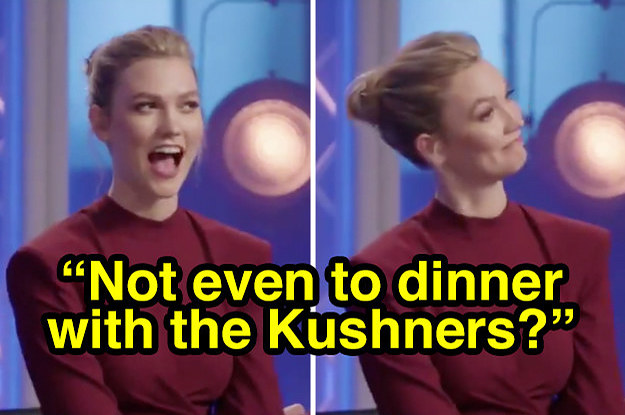
Everyone has their own version of what might fit this bill.  Some family members of mine have been watching mid-90s NBA games.  In my opinion, Great British Baking Show is the peak version of this form of diversion.  Sadly, Husband and I gobbled up all the GBBS reruns before and while I was on maternity leave, so for us it's not going to meet the 3) criterion.  So, our choice: Heidi Klum and Tim Gunn-era Project Runway.  Specifically that, because Karlie Kloss-era PR runs afoul of criterion 1):

Gross!
I can attest: this strategy is working pretty great so far!  We get to look at pretty things, enjoy some light reality TV hijinks, and thereby create a tiny, admittedly but arguably healthily avoidant oasis for ourselves.

Hoping this is at least a little bit helpful, and looking forward to coming out the other side of this with all of you.

{Heart}

Saturday, April 18, 2020

Not Exactly "Burning" for This Movie

Hey there,

Let's talk about another movie!  Today, I'd like to talk about "Burning" (2018).


I was very interested to see this movie after hearing Steven Yeun do an interview about it.  I love Yeun because I loved him in Walking Dead, so his involvement was already a major selling point for "Burning".  Add to that that the movie was inspired by a short story by Haruki Murakami, which I learned from one of my much-referenced movie lists, and I was very much on board.

In premise, "Burning" feels familiar to the deeply unsettling "The Vanishing" (1988): a woman disappears without a trace, and a man romantically involved with her feverishly and relentlessly seeks answers.  I don't believe I'm the first to make the comparison between these two films, but for our purposes today, it's an important one.  Almost two decades after watching "The Vanishing", its terrifying and disturbing ending still freaks me out.  "Burning", on the other hand, fails to land that such an enduring punch.

There are aspects of "Burning" that I liked.  It is listless, haunting, and atmospheric in a memorable way.  I appreciated the introduction to the homes of Lee Jong-su, as portrayed by Ah-In Yoo, and Shin Hae-mi, as played by Jong-seo Jun.  Like the homes in the Hirokazu Kore-eda films I recently wrote about, their homes felt real and lived-in.  However, the homes in "Burning" are either so tight that it's difficult to imagine living in them or so cluttered and unkempt that it would be hard to feel fully settled in them.  Both are intentional choices that contribute to the perpetual smoldering unease of this movie.

Of course, I'm not against that feeling in a movie when it serves a fulfilling end.  Unfortunately, "Burning" doesn't scratch enough of its lingering itches to leave its audience feeling satisfied.  Instead, it spends much of its time focused on the irritable, unnervingly sexually frustrated, and until-the-very-end ineffectual Jong-su.  Of course, some of the major questions of the film could be answered by deductive logic (Is Steven Yeun's Ben a serial killer? His poorly-hidden stash of trophies proclaims a resounding, "Yeah probably.").  However, unlike in "The Vanishing", not enough of those questions are answered to serve as payoff for seeing "Burning" through to its abruptly blazing conclusion.  By its end, "Burning" left me, in contradiction of its title, cold.

I gave this one a 3.

{Heart}

Wednesday, April 8, 2020

A Surprisingly Beautiful "Cold War"

Hello!

So after a mini-spate of not-so-great movies, let's mix it up with one that I actually really appreciated.

May I present to you: "Cold War" (2018).


This film follows a love story, based upon Director Paweł Pawlikowski's parents, through multiple vignettes spanning years and nations.  Pawlikowski described his parents as "[the] most interesting dramatic characters I've ever come across" who "were strong, wonderful people, but as a couple, they were a never-ending disaster."  Shot in a beautiful and lush black-and-white reminiscent of "The White Ribbon" (2009), "Cold War" delivers on the promise of the real-life people that spurred its creation.

Impressively, the movie manages to capture the chaos and tortured emotion of this romance without driving you to dislike or disdain either of the characters.  Contrary to Pawlikowski's characterization, these by no means appear to be wonderful people, but they are tough and they burn bright even as they ultimately fade away.  Their fleeting moments of tenderness and the fervor with which they continually fight their way back to each other deeply humanize them even as those moments make it clear that their union is doomed.


It is a considerable feat for Pawlikowski to render these characters with such a loving touch, especially when you consider that the child who appears so briefly onscreen that you would miss him if you blinked is likely meant to represent the director himself.  It's easy to imagine how far-from-ideal it would have been to be parented by two people who just couldn't figure out how to love each other peacefully, and how their failure to do so might have led to their child being overlooked collateral damage in the recurring catastrophe of their love and dissolution.  Yet still, despite all of the resentment that Pawlikowski would be entitled to feel toward his parents, none of it arises to sour this lovely and affecting film.

I gave "Cold War" a 4.5.

{Heart}

When Movies Get "Under the Skin"

Good evening!

For all the appreciation I have for the lists I have been consulting to guide my recent movie-watching, I am here to report that one of them did me dirty.

Let's talk about "Under the Skin" (2013).


Full disclosure and also spoilers ahoy: I got 29 minutes into this movie before I NOPE'd the hell out of it.  By this still-early stage, the film had already deeply upset and disturbed me.  This is admittedly because I am, of COURSE, particularly sensitive to the portrayal of, I don't know, a baby being abandoned, helpless and crying, on a beach after both its parents drown trying unsuccessfully to save their dog from also drowning in brutal and assuredly frigid surf and that baby is shown not only at the moment at which it dawns on the audience that both its parents have not returned from the waves but also after time has passed and it is now dark and the baby is still crying and helpless and a person walks right by it who could help it but they don't, as the camera lingers on this dark yet cruelly clear image of a distraught and gut-wrenchingly helpless orphaned child. 


Yeah, fuck that movie.

Having now read the Wikipedia summary of the film (which obviously contains even more spoilers), I'm honestly not in the least concerned that I'm somehow missing out on the rest of it and I instead feel further affirmed in my decision.  Some movies just don't need to be in your brain, you know?  Even if they somehow made it to the number two spot for the last decade on a list you thought was your friend.

I gave this movie a 1 and I'm not even remotely sorry.

{Heart}