Friday, May 29, 2015

"Avengers: Age of Ultron" vs. "Mad Max: Fury Road"

Ohai!

As devoted friends of the blog may remember, one of my earliest posts was a head-to-head comparison of two somewhat related yet very different movies.  I think we are long overdue for another such post.

Today's opponents:

"Avengers: Age of Ultron" (2015)

vs.
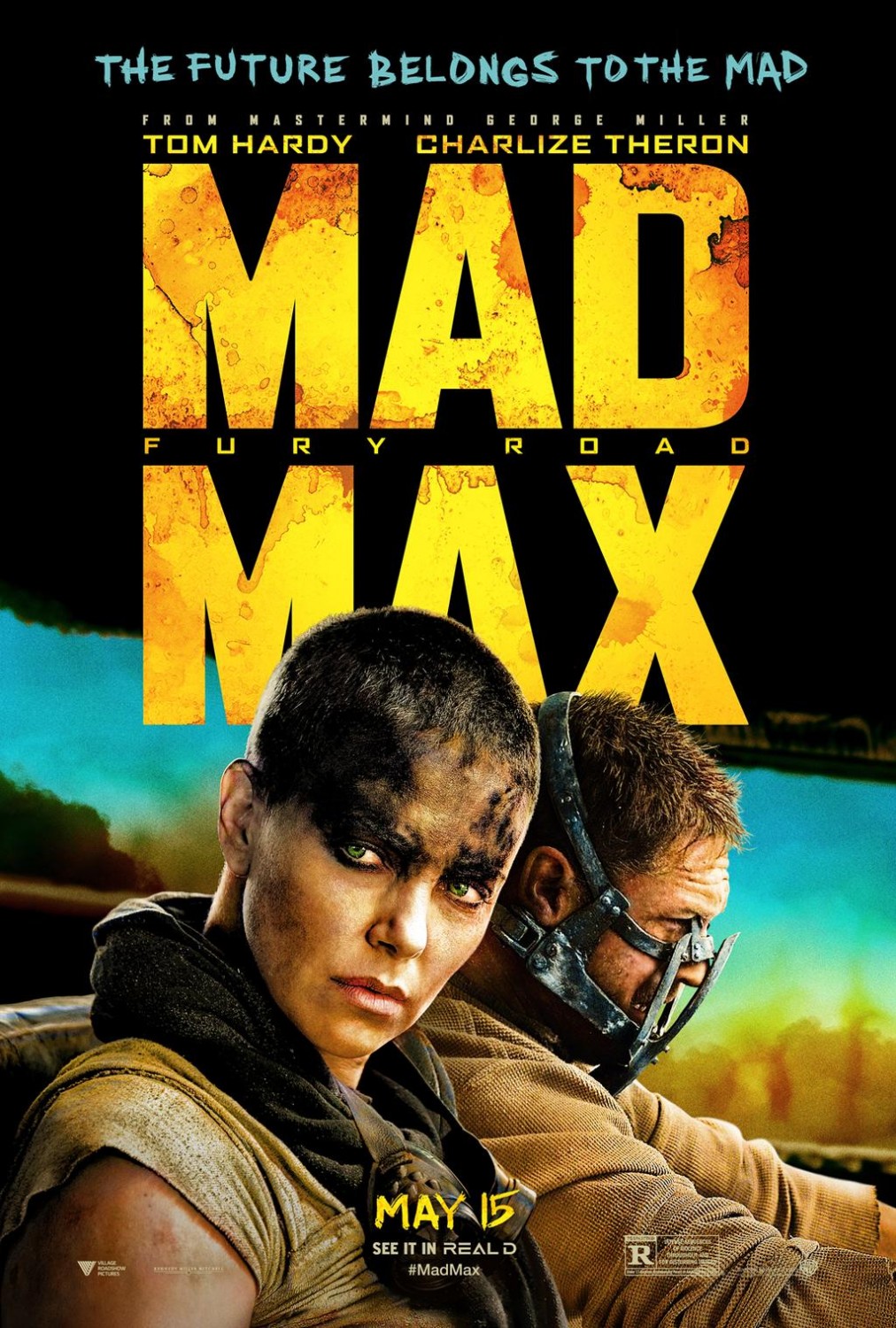
"Mad Max: Fury Road" (2015)

Common elements: 
  • Both movies are utterly ridiculous and so packed with action as to be totally absurd.  To say either fully has a plot might be a bit generous.
  • Both movies are nevertheless very fun.  Spectacle!  Explosions!  Fighting and stuff!
  • Both movies involve women and men fighting a common enemy side-by-side.

Major differences:
  • "Mad Max" is a fucking awesome feminist film, and is fun for all genders.  It made me feel like this:

  • "Age of Ultron", on the other hand, made me feel like this:

To back up, lest I appear to be taking myself too seriously or something: Yes, I know both of these movies are completely stupid, fluffy, explode-y fantasies.  Maybe holding them up to any even barely substantive analysis is therefore unfair and/or silly.  

However, a) it's goddamn 2015 and b) there is literally zero harm in adding a little gender equity into a narrative--unless, of course, you ONLY want misogynist dudes for an audience.  I therefore can't help but be exceedingly annoyed when moviemakers appear to thoughtlessly, or worse intentionally, choose the same boring and stereotyped gender roles over and over for female characters.

Allow me to explain.

There are basically 2.5 lady characters in "Age of Ultron".  Here is what two of them look like:

I know, she's mostly covered, but at least they added light-up striping
to accentuate her hourglass figure!

Nice modified schoolgirl, complete with a glimpse of red lacy bra.
There were six significant lady characters in "Mad Max", and the main lady character looks like this:

Yes, the belts are a bit corset-y, but I'm digging the overall functionality,
mild griminess, and robo-arm.
Also, I'm minorly distracted by naming choices for female characters.  In "Age of Ultron", the naming formula for women is apparently "color + gendered w-word."  Black Widow.  Scarlet Witch.  Not so much with the dude-bro characters (e.g., Could they be Green Angrybro? Red Metalguy? Blue Armyman? Blond Hammerdude? Oh god the men so outnumber the ladies, I think I forgot someone.  Oh!  Bruised Archer?).  In "Mad Max", Charlize Theron is Imperator Furiosa.  Her name alone conveys formidability and awe, whereas her "Avengers" counterparts conjure bugs and Halloween costumes.

Point: "Mad Max".

In "Age of Ultron", all the goddamn dudes have powers that are badass as shit (with the exception of Hawkeye... poor, lame Hawkeye).  Some of them are powerful enough to literally tear cities apart.


Black Widow's power is essentially giving assists to her male counterparts.

"You dropped your shield, Blue Armyman!"
Alternatively, the Scarlet Witch is actually insanely powerful.  It's not 100% clear exactly what her powers *are*, but it's some kind of red lightning-y telekinetic mind control?

Anyway, so they were starting to win me over a little, and then this fucking line.  This fucking line, from the LAMEST, most injury-prone character in the movie to arguably the most powerful, happened:

"I'm not here to babysit."

...Excuse me??


Wait for it.


...................


Wait.... for it.....


Anddddd I'm done with this fucking movie.

In "Mad Max", to the contrary, Furiosa easily steals the show from the film's namesake.

Oh hey.

Don't mind me.

I'm just righteously owning the apocalypse.

As if that gratifying, exhilarating reversal weren't enough, there's this counterpoint to the above never-to-be-mentioned-again line.  Max, played excellently by the incredibly watchable Tom Hardy, hijacks Furiosa's rig, which is filled with women she's trying to liberate from sexual/forced childbearing slavery.  He starts commandeering all their weapons and demands that one of the women pass a gun to him.  One of her female compatriots says to her,

"You don't have to just because he tells you to."

Okay, it might seem like a little thing.  But instead of cowering in front of an aggressing man, despite having spent God knows how long in the captivity of men, the women of "Fury Road" don't forget their agency. They are essentially stating, "If we allow you to wield power in our midst, it's with our agreement.  Because we have power too."

To clarify, "Mad Max" is hardly a ball-busting estrogen romp.  It's simply a story in which women are powerful *too*.  (God I can't tell you how annoying it is that this is remarkable.)  Furiosa, Max, and their motley assortment of co-warriors, men and women alike, ultimately make an excellent team--a team in which the heros don't compulsively and constantly attempt to oppress the heroines by invoking their femaleness as if it constitutes some kind of weakness.  In "Mad Max", that's what villains are for.

Are you catching the hint, "Avengers"?

Again, point: "Mad Max".

Ultimately, my extreme frustration and exasperation with the gender dynamics of a movie like "Age of Ultron" is this: would it *hurt* for there to be gender equity in these films?  Why *not* make that choice?  Do you not trust your audience to watch a movie in which women aren't fetishized and demeaned?  Do you not think there are any men who find powerful women appealing?  Do you not care whether women buy tickets to your film or feel empowered watching it?

Although I'm currently focusing on the gender dynamics of these films, I'd be remiss if I didn't also note the completely infuriating lack of diversity in "Age of Ultron".  All minority characters have been so pointedly relegated to sidekick status  that it's frankly bizarre.  

To follow my line of inquiry, why *not* diversify the cast of these films?  Why not cast a Latino Ironman?  Or an Asian Thor?  (The white people can keep Hawkeye... no one wants Hawkeye.)  I've heard tell that they're finally ethnically updating Captain America, but fuck you.  You've taken too long.  There is no reason a cast of *eight* characters should be comprised of only white people--especially eight *imaginary* characters, where you can choose any and all features and traits you see fit.  God forbid the movie's cast show diversity that is at least attempting to be commensurate with the actual population of the country that created the film.  Or do you not trust your audience to watch movies with casts that actually fully represent us?

So, clearly, if you were to choose between these two completely absurd but nevertheless fun movies, I would strongly recommend a ride down "Fury Road".  Think of it as a vote for cinematic progress.

In closing, my ratings were as follows:

"Avengers: Age of Ultron" (3)
"Mad Max: Fury Road" (4)

Thanks for reading!

{Heart}

Sunday, April 12, 2015

Snap Judgment: "Whiplash"

Hey guys,

Last weekend, Husband and I online-"rented" "Whiplash" (2014).  We were pretty pumped about it given the immensely positive reception it's gotten, and it came to us via some credible recommendations.

Third snap judgment: commence!!


Snap judgment: great acting, but really overrated.

Leading with the good:

  • J.K. Simmons: really great!
The role I most remember J.K. Simmons in is the very sweet if a bit clueless dad in "Juno" (2007).  For something of a tonal change, he takes a fun, terrifying, intense turn as Fletcher, a brutally exacting, emotionally abusive teacher in "Whiplash."  He's as mesmerizing to watch as he is frightening.  That's largely because he performs the everloving fuck out of this role, and it's great.  

It's also because, as an audience member, you're experiencing the kind of fear-instilled watchfulness someone experiences when they're in an abusive relationship of any kind.  In that position, you learn fast that if you're not watching the person carefully, walking on eggshells, and carefully sensing every subtle shift in their mood, you could get a chair thrown at you and never see it coming.


So well done, sir.  (I guess?)
  • Miles Teller: pretty great, but Jesus christ have you heard of MacGuffins??
I'm not as familiar with Teller's previous work, but it's very convincing that he is fully set on becoming a famous jazz drummer as Andrew.  Andrew pays immense, frankly absurd costs in pursuit of his aim.

I believe you, but whyyyy
The thing is, this character has basically zero back story, and I have a hard time caring if he's successful when I don't know why his goal means so much to him.  In an early scene, Fletcher all but points out this movie centers on a giant MacGuffin when he observes that Andrew doesn't have any musicians in his immediate family.  It's almost as if the scene was put in the movie to make sure the audience notices that the main character's merciless drive for success is, as far as we can tell, rootless.
  • Pretty much copying the opening scene from "The Social Network" (2010): but in a less satisfying manner!
Additionally making it difficult for me to care about Andrew: he's kind of a jackass.  For example: he breaks up with his sweet, probably-too-good-for-him girlfriend in a super shitty, cocky, egotistical manner, telling her that she's basically standing in the way of greatness by dating him.  Even though as far as we can tell she just wants to hang out with him sometimes.

Okay.

1) OH MY GOD dude get over yourself.
2) Run, girl.  RUN.

So it's not that I'm shedding any tears over the end of that relationship other than tears of relief for that poor girl.  But the thing is, the scene feels so ripped off from another movie about a socially callous narcissist...

Seem familiar?
...and that scene happens to end much more satisfyingly:


So there's that.
  • Reiterating for at least the fifth time in recent memory the now-tropey character study of the soulless male psychopath: meh!
I might have enjoyed "Whiplash" more if it wasn't tiresomely reminiscent of several other recent films, most of which have admittedly received significant acclaim.  

Sidenote: I'm starting to wonder about the psyche of the average film critic if they find narratives about characters like these so appealing.

Anyway, although some films using this trope are definitely more skillful and interesting than others,


oh


God


enough

I blame you, "Drive."  But I would.
already.
  • Can I please just have a plot that makes sense: apparently not! (Spoilers ahoy!)
There are several important moments in "Whiplash" that just ring false.  Andrew has a meal with his family? random family and friends? that is so randomly hostile as to be absurd.

Later, Andrew gets in a car accident--for what's one of the truest shocks in the movie, to be fair--and STILL drags himself onstage and attempts to perform in a major competition, only to tackle Fletcher after he tries to end the performance because Andrew is so freaking bloodily concussed and possibly bleeding internally that he can't play.

Nope.

Finally, after Andrew gets Fletcher fired through dubious legal action, he runs into Fletcher by chance, enabling Fletcher to set a massive trap for Andrew by getting him to perform at Carnegie Hall with Fletcher's new jazz ensemble and intentionally not telling Andrew what the first song of the performance is, so Andrew heroically botches the performance of that song.

Nope.  Nope nope nope.

Fucking please.  Given everything we've seen of Fletcher, there is no goddamned way EVER that perfectionistic, bloodthirsty, megalomaniac of a dude would throw a performance he was conducting at CARNEGIE FREAKING HALL just to settle the score with some ex-student.  No.  Just no.  Rewrite that bullshit part of the script and try again, because no.


And then... they're cool at the end?  They have a little Sam and Frodo moment?  Are we serious.  Are we actually serious?

I need to stop because I just can't with this nonsense.

Additionally, a public service announcement: any directors in the universe, please take note that constant unmitigated tension does NOT constitute a coherent, intelligible emotional story arc.  98 minutes of undifferentiated anxiety does not make for a pleasant movie-watching experience (especially when you didn't think you were signing up for a horror movie), and it certainly doesn't make us feel like we were just a part of something that told a story about people who have changed.  And last time I checked, that's kind of a prerequisite of any real story, isn't it?  That someone, ANYONE, changes, at least a little?

Ugh.

With all my very apparent frustration, I still think it's a movie worth watching if for nothing other than the performances.

So, final movie score: 3

{Heart}

Wednesday, February 4, 2015

The Brutal Time Warp of "Selma"


Good evening,

In second grade, I became obsessed with Martin Luther King, Jr.  I learned about him in Mrs. Latin's class and became completely transfixed.  I was fixated to the point that I would routinely guess him (incorrectly) as the answer to our regular classroom game of 20 Questions.  When it was my turn to choose a person for my classmates to guess, some discerning 8-year-old colleague of mine guessed Martin Luther King with the first question and thereby set the record for shortest game of 20 Questions in the 2L classroom that year.

My guileless game-playing notwithstanding, awe is really the best word for the emotion I felt toward this titanic figure.  I was awed that he could enact positive societal change through peaceful means.  I was awed by a man who had the courage to put himself in harm's way in the service of his commitment to what was right.  I was awed by how wholly he dedicated his life to creating a brighter, better, more just future.

So of course, I saw "Selma" (2014).

I knew at the outset that it would obviously be an intensely emotional viewing experience.

What I didn't know was how painful it would be to experience precisely how little has changed in the fifty years since the events depicted in this movie.


To focus briefly on the positive, the cast of "Selma" is absolutely wonderful.  David Oyelowo is steadfastly composed, bearing the burden of generations of suffering with sturdiness and grace as Dr. King.  Carmen Ejogo is lovely and formidable as Coretta Scott King.  Oprah Winfrey is magnetic and gut-wrenching as Annie Lee Cooper.  Tessa Thompson is stoically resolute and radical as Student Nonviolent Coordinating Committee (SNCC) co-founder Diane Nash, one of the few women on the front lines of the movement.

And now, the rest.

One of the most potent emotions I experienced while watching "Selma" was unbearable tension.  As a viewer, you endure only minutes of acts of protest that often lasted hours, yet those minutes are agony laced with immense dread.

You know the activists represented in these scenes had no recourse to gain their rights other than to engage in acts of civil disobedience, and you simultaneously know that terrible things happened to them precisely because of that civil disobedience.  Yet you have to wait with the knowledge that those things will, inevitably, unfold.


"Selma" captures those unfoldings with a terrible, time-slowing beauty, holding African American suffering firmly in the viewer's gaze as a commandment: We must not look away from faces of people seeking justice, especially in these moments when it is viciously withheld from them with violence and oppression.

Especially when it is withheld in our names.


Another potent emotion evoked by "Selma" is pain.  It is painful watching people struggle for rights to which they are unquestionably entitled and watching them be literally beaten down for demanding them.  It is painful seeing how despicably and systematically our country has failed to uphold the values it is meant to embody.

But watching "Selma" as a white person brings with it a special kind of pain.  It's painful because white people were and are unequivocally responsible for this oppression, as if sharing rights with African American fellow citizens somehow makes their rights mean less.  It's painful because you witness white civilians--not purported officers of the law or the state, just average people--take time away from their daily lives to head over to a bridge with bats and tire irons so they can mercilessly beat the shit out of peaceful protesters.  It's painful knowing that was done in my name, because those white people perceived some kind of kinship in our whiteness that transcended their kinship with all human beings.

The guilt that knowledge brings is sickening.  The shame is impossible to bear.  But it's critical to be brought face to face with it.  It's imperative that we weigh this one tiny piece of the price of white privilege, in these moments of suffering and courage while facing acts of hatred.


In addition to confronting us with the realities of African American suffering and the brutality of white supremacy, "Selma" succinctly sums up how witheringly high the stakes were before the Voting Rights Act of 1965 was passed.  African Americans who attempted to register to vote in the South, like Annie Lee Cooper, often lost their jobs.  They were required to pay poll taxes and submit to examinations often on incredibly obscure factoids about federal and local governments.  They had to find a registered voter to endorse them with the full goddamned knowledge that no one in their community was eligible to do so.  Because they were not registered to vote, they were barred from participating as jurors, so the white people who murdered their loved ones or neighbors would walk free from fear of conviction because they would be tried in front of a jury of only their white peers.  

The desperate fight for voting rights was about so much more than being able to choose one's elected officials--as if being denied a right so fundamental to democracy wasn't enough of an explanation--it was a fight for the right to exist.


After all of that inter-generational white guilt, shame, and pain, you'd think I'd be heartened by the apparent sea change that occurs when white activists start joining Dr. King's movement in Alabama.  But after counting the price already paid in blood, broken bones, and lives by the time those white activists show up and after seeing how ruthlessly white officers and civilians exacted that price, it's sickening and infuriating watching the police resistance to the protest evaporate as the movement makes its second attempt at crossing that bridge.

The message that sends is that we as a nation refuse to hear African American voices unless white voices lend them credence.  We refuse to listen to them simply on their merit as fellow Americans.  We will only allow them to walk safely, to protest peacefully, to demand their rights, to speak and be heard if they are temporarily bestowed with the mantle of white privilege.  Only then will we listen.


Of course many things have improved since the era depicted in "Selma," but so many things feel the same: police brutality toward peaceful protesters, police use of unnecessary lethal force toward African Americans with reminder upon reminder that justice will never come, and systematically racist implementations of the legal system still prevail.  Unbelievably, Dr. King's work in winning voting rights was undone fewer than fifty years after he finally succeeded, as if we're suddenly living in a different America than the very real very unjust one confronting us day after day.  


Especially with the problematic complexity of the role white people have taken in advocating for equal rights, it might feel like there's nothing to be done.  It might feel like there's no hope.

But of course that's not true.  It doesn't mean white people should stay home, but it means we must reflect on these dynamics of power and privilege and the role we play, even unintentionally, in perpetuating them.  We must each call on ourselves to listen better to perspectives other than our own, and for insisting on more equitable distribution of privilege in our society.

It is precisely because we still have so much to do that we must never give up.  We must all be better at giving our time and our hearts and our ears and our money and our words to the tireless pursuit of justice, because although the arc of the moral universe is long, that is ultimately where it bends.

{Heart}

Tuesday, February 3, 2015

TYSG: Collisions of Music and Humor

Hi darlings,

I have sincere intentions of devoting more time to movie-dedicated posts this year, especially in observing that, together with posts about how challenging internship was, last year TYSG posts largely dominated the content of this blog.  That of course is largely a reflection of the fact that last year was, in fact, genuinely in need of a Terrible Year Survival Guide.

Even so, I love writing about movies and want to continue to do so with regularity, even if I sometimes hesitate because it takes more time than these posts do.  Although the TYSGs speak to the Psycho (i.e., graduate school) half of PsychoCinematic, obviously the Cinematic half needs just as much air time.

That being said!  I've spoken to the value of music as a way to get through difficult times, and even how one's relationship with music might shift depending on precisely how difficult times get.  I've also spoken to the importance of humor as a remedy for pain.  But what happens when their powers are combined?

AMAZING things!

Two examples:

1) Sharks!

Bear with me.

I listened to this PRI story about a great white shark named Lydia who has been GPS tracked over 27,000 miles of travel through the oceans, and whose progress fans can follow on Twitter.  It's a great little story, but the song at the ends takes it to another level.

The song is "Lukey" by the Canadian band Great Big Sea, in collaboration with the Irish band the Chieftains.  It's such a jubilant, joyful song that I honestly think it's impossible to listen to it without smiling, even if you can't understand a word they're singing.

But!  It gets even better when you imagine a 2,000 pound lady shark swimming around off the coast of Newfoundland, pumping her fins to the beat of the music like:


...Minus that slightly rude bit, of course.

Anyway, here's the video:


2) Dancing robots!

I like Spoon a lot, but their songs might not seem outright cheerful at first listen.  They have more of a brooding, sexy beat thing going that reminds me a little bit of the Beta Band--a little heady, a little chill, and really great to listen to.

But!  Then you watch this adorable video of a squishy little dancing robot and his blank-faced scientist compatriot, and suddenly this song is an utter, giggle-inducing delight:


So what I'm highlighting with these two examples is that the associations and narratives you make for yourself in your mind, especially when paired with music (or a smell, or an image, or a place, or...), can offer such potent little jolts of joy throughout your day if you just stay in contact with them.  For my purposes, rest assured that both of these songs are on the happy playlist I've dutifully cultivated for years now, as well as the other musical TYSG entries over the years.  I'm pleasantly surprised by how powerful the lift in my mood is when either of these songs comes through my headphones, but that's because of the delightful little movies they cue up in my brain.

Enjoy!

{Heart}

Saturday, January 31, 2015

2014 Movie Round-Up!!


Woooooooooooooooooooo!!!

Yes!!  It is that magical time of year during which I get to review the glorious array of films I watched during the previous year, in triumphant vanquishment of my 52-movies-a-year resolution.  I am just a tiny bit extra eager to celebrate this accomplishment because, as you may remember, is basically the only resolution I fully adhered to in the previous year.

Another reason to celebrate the writing of this particular post:

This is my fifth annual movie-round up!  FIFTH!!  There have been four other ones before this one!!

Guys I have written so many of these!!
Enthusiasm is certainly running high on this side of the blog.

Without further ado of any kind!

The PsychoCinematic Year in Movies
(2014 Edition)

1. Apollo 18 (2)
2. Room 237 (1)
3. The Wolf of Wall Street (5)
4. Cropsey (2)
5. American Hustle (3)
6. 30 for 30: The Price of Gold (3)
7. Ender's Game (4)
8. The Grand Budapest Hotel (4.5)
9. Captain America: The Winter Soldier (4)
10. The Imposter (4)
11. Bronies: The Extremely Unexpected Adult Fans of My Little Pony (3)
12. The Awakening (3.5)
13. The People vs. Larry Flynt (3)
14. The Queen of Versailles (3)
15. The Seven Year Itch (4)
16. Unhung Hero (3)
17. X-Men: Days of Future Past (3)
18. Zero Dark Thirty (4)
19. Behind the Candelabra (4.5)
20. 22 Jump Street (4)
21. The Conversation (4)
22. Badlands (4)
23. The Woodmans (4)
24. Snowpiercer (4)
25. Guardians of the Galaxy (4)
26. Spartacus (5)
27. Europa Report (4)
28. A Most Wanted Man (4)
29. Calvary (5)
30. Detropia (4)
31. 12 O'Clock Boys (5)
32. The Grey (3)
33. Boyhood (4.5)
34. One Nation Under God (4)
35. Blood Into Wine (2)
36. A Late Quartet (5)
38. Gosford Park (4)
39. Salinger (3)
40. Sons of Perdition (4)
41. The Drop (5)
42. Stuck (3)
43. (A)Sexual (2)
44. Best Worst Movie (3)
45. The Disappearance of Eleanor Rigby (1)
46. Muppets Most Wanted (3)
47. Bad Words (4)
48. The Amazing Spider-Man 2 (3)
49. The Fugitive (4)
50. Divergent (2)
51. The Edge of Tomorrow (4)
52. The Lego Movie (5)
53. House on Haunted Hill (2)
54. Interstellar (4.5)
55. Shivers (1981) (3)
56. The Hunger Games: The Mockingjay, Part 1 (4)
57. Carrie (2013) (2)
58. The Galapagos Affair: Satan Came to Eden (2)
59. Foxcatcher (4)
60. The One I Love (4)
61. The Hobbit: The Battle of the Five Armies (2)

I would personally like to thank the month of September for being generally exceedingly incredible this year, both because some pretty great stuff happened during that month but also because, as a month during which I basically had nothing to do (other than finalize wedding plans and like get actually get married), I was able to watch SEVENTEEN movies.  As you can see, without September, I would not have been able to exceed this year's 52 movies goal.

September: officially a good month.

Okay!  Down to business.  First thing's first: this year's most terrible movies!

For seriously? Alien rock-spiders?:

For being the first in this year's multi-entry series of meh documentaries, or
for serving as a reminder that being *about* a great movie doesn't make a movie great:
Room 237 (2012)

For acting as if you're making "The Thin Blue Line" (1988) when you're totally not:
Cropsey (2009)

For being proof that just because the guy from a band I like is in it, that doesn't mean
he knows how to make a competent documentary:
Blood Into Wine (2010)

For having a perfectly interesting topic with very bleh execution:
(A)Sexual (2011)

For having a pretty crappy and flat script and having literally zero to do with the Beatles:
The Disappearance of Eleanor Rigby (2014)

For basically being "Hunger Games" without anywhere near as compelling a heroine:
Divergent (2014)

For abundant sexism and and annoying portrayal of a mental health practitioner:

For seriously fuck everyone responsible for every unnecessary movie remake:
Carrie (2013)

For passably interesting + way too long still = meh:
The Galapagos Affair: Satan Came to Eden (2013)

Finally, and based on last year predictably:

For being yet another piece of overwhelming evidence that Peter Jackson should not be allowed to make movies:
The Hobbit: The Battle of the Five Armies (2014)

So now I get to choose my overall least favorite film from the past year.  Like last year, this choice is a bit challenging due to the crowded field and many of the entries annoying me in slightly different but comparable ways.

Okay, I'm decided.  I'm going to take a stand:


It was boring.  Making this series into a trilogy was a blatant money grab at the immense expense of the plot, which was stretched way too thin and therefore had crap added to it unnecessarily.  The characters were flat, their motives were stupid, and the stakes were not compelling.  There were like TEN MINUTES OF DRAGON and that's it.  IT WAS TOO GODDAMNED LONG.  

Basically, I'm just so over Peter Jackson.  I'm over his inability to hold a serious emotion for more than 90 seconds.  I'm over his failure to recognize that a dramatic score and a bunch of bloated action sequences does not equal an intelligible or enjoyable story arc.  I'm over what he's done to a series of books I loved deeply as a child.

UGH.  MAKE HIM STOP.

And now on to the even more fun stuff!

The best movies I saw in 2014 were:

The Grand Budapest Hotel (2014)
Behind the Candelabra (2013)
Spartacus (1960)
Calvary (2014)
12 O'Clock Boys (2013)
Boyhood (2014)
A Late Quartet (2012)
The Drop (2014)
The Lego Movie (2014)
Interstellar (2014)

Oh God.  This is a tough one.

Well, we all know I thought "Wolf of Wall Street" was fucking spectacular.  It was brash and bold and funny but substantial and dark, excellently shot, and well-paced and making you want to see more even though it's over three hours long.  That's pretty amazing.

"Behind the Candelabra" might seem like a bizarre choice, but the HBO movie featured incredible, touching, compelling performances by both Michael Douglas and Matt Damon.  It beautifully honored and elevated its subject when it would have been very easy to make a trashy, cheap movie out of this story.

"Calvary" was directed by John Michael McDonagh, the older brother of possibly my favorite playwright, Martin McDonagh.  Creating stories with inky black dark humor mixed with gut-churning, seething human anguish and imperfect, heartbreaking, and beautiful human decency clearly runs in this genius family.  This film feels close and confining like a tense, tightly-written play but without the stiff staginess that cripples other stage-to-screen translations.  I could watch Brendan Gleeson butter bread and be transfixed.

Finally, "The Lego Movie" is one of the most delightful, fresh, packed-with-smart-humor-and-genuine-sweetness films I've seen in years, easily rivaling the best of Pixar.  Husband and I watched in twice within 24 hours and loved every minute of it.  Also it features Charlie Day, my favorite!!


But finally, I have to go with a quieter movie that might have flown under most people's radars.  It's a film that features a city I deeply, desperately love.  Its footage is so gorgeously, unexpectedly moving it brings tears to my eyes just thinking about it.  It's a powerful reminder that human beings have the capacity to create and thrive and self-empower in ways that we may not readily recognize or understand, but which are nevertheless vibrant examples of the gorgeous human spirit.

My favorite movie in 2014 is "12 O'Clock Boys."


It's on Netflix view instant--go see it!!**

{Heart}

** = ETA: I'm wrong about "12 O'Clock Boys" being available via Netflix view instant.  You can rent the movie through the DVD service on Netflix,  but it's unfortunately not streamable through that carrier.  Instead, you can go to the movie's website to rent and stream the movie or buy it outright.

You can also watch the trailer!