Sunday, June 24, 2018

Snap Judgment: "Jurassic World: Fallen Kingdom"

Oh hello,

So Husband and I saw "Jurassic World: Fallen Kingdom" (2018) this weekend.  To continue the tradition established with "Jurassic World" (2015), I feel I have no choice but to write a follow-up Snap Judgment.

SO MANY DINOSAURS it's GOT to be great, right??
.......Right???????

Spoiler alert: my alternate title for this post was, simply, "Jurassic World: Fallen Kingdom" is Terrible.  Feel free to continue reading to learn five bullet-pointed reasons this sentiment is unassailably true!

  • Seemingly impossibly, an even less-inspired script than the last one.
In my review of "Jurassic World," I noted that the script was kind of excruciatingly bad.  Every line felt stilted and inauthentic, and every attempt at a zing-y one-liner rang pitifully hollow.  This is, I would argue, an impassable barrier to success for an entry in a movie franchise that was established by "Jurassic Park" (1993), whose whip-smart and infinitely quotable script is peppered throughout with jokes that offer a skillful, wry counterpoint to an otherwise bracing and thrilling adventure.

Well, somehow, "Fallen Kingdom" pulled off what is possibly an even worse script than "Jurassic World," because it didn't even seem to try.  There was a moment or two that threatened to produce a tiny smile, but these were generally sight gags.  None of the dialogue had any life to it whatsoever.

  • Rampant necrophilic throw-backing.
There are too many allusions to the original "Jurassic Park" to count, and every single one made me want to angrily shout, "STOP DESECRATING A MOVIE I LOVE."  A selected list:
    • Not one, but two T-Rex spin-and-roars.
You know the move.  It's the dinosaur equivalent of Blue Steel.
    • Tapping raptor toe-claws.
    • Not one, but two moments of child-escaping-being-eaten-by-dinosaur-by-slamming-door-shut-on-tiny-enclosed-space-just-in-time.  (Although of course I have a hard time believing that an old wooden dumbwaiter door would withstand "Fallen Kingdom's" version of the wOrlD's MosT tErRifyInG diNoSaUr, but whatever.)
    • Raptors figuring out how to open doors.
    • Someone possibly being squished under a car.
    • Emotive moment in which a dinosaur fan/expert sees a Brachiosaurus for the first time.  (This might top the list of the most HOW DARE YOU-IEST moments of this stupid, stupid movie.)

What "Fallen Kingdom" seems to fundamentally misunderstand is that imitation of a great movie does not inherently confer that greatness to this film.  To the profound contrary, in this case it simply mercilessly drives home how lackluster "Fallen Kingdom" is, because it reminds you of how great its predecessor was.

  • Clothes really do make the woman, evidently.
One of the many irritating aspects of "Jurassic World" was its bizarrely non-existent character development for Bryce Dallas Howard's Claire--except through her costuming.  Well, the profoundly irritating trend continues, to a point that is honestly so confusing I was left wondering, "But seriously, who is this person??"

Before: Spotless Ice Queen!

After: Totally Not That!

See, NOW Claire is wearing military green.  She is letting us know, solely through color choice and with absolutely no explanation, that she isn't a prissy soulless corporate lady anymore; NOW she's an animal rights-loving doe-eyed bleeding heart environmentalist.  Now she's SO committed you guys to saving endangered animals (and by "endangered animals" I mean "ravenous deadly resurrected crimes against nature").

So how committed is she?

She is SO committed that, unlike LITERALLY EVERYONE ELSE who has ever survived a dinosaur-driven debacle in the Jurassic universe, she is totally down to go back to the island that houses the creatures that ate her assistant (TWICE) while also killing and maiming countless others.  Everyone else who was invited back was like, "Hey that was actually a bit traumatic so no thanks," but she was like, "I have a ponytail now, so I can do anything!!"

Scriptwriters Please Note: This is NOT how you write a convincing female character.  Next time, please try giving her thoughts that she sometimes says out loud and that actually make sense in the context of her life experience.

  • Utterly stupid plot twists.
I'm not wanting to get too excessively spoiler-y, so I'll just give some examples:
    • Dinosaurs with racing stripes.  You can tell this one is EXTRA scary, because its stripe is yellow!
    • Clarifying question: Is cyanide gas even a thing?  If so, why have it just out and about in catastrophically large quantities?
    • IS she your granddaughter?  Well IS SHE??
    • STOP RUINING BD WONG.

  • Literally no substantive resemblance to the original.
See, I'm upset about "Jurassic World" and "Fallen Kingdom" because "Jurassic Park" is truly a special movie.  I assert that not simply because I fought my parents to see it when I was a scant few years shy of its PG-13 rating, not because my perspective is skewed by seeing it for the first time with the eyes of a child.  As you know, I watched the move again relatively recently, and it still holds a formidable amount of power.  My beef with Steven Spielberg is solidly on hold when it comes to "Jurassic Park," because it is just a damn fine movie.  

What "Jurassic World" and "Fallen Kingdom" are lacking is not just a snappy script.  It's not just missing John Williams' beautiful, compelling score, although good God it sure hurts not to have it.  It's also that there is no spirit of scientific study and discovery, lived through scientists who have studied these creatures across millennia and toiled to answer unanswerable questions.  


It's also the lack of pacing, not having any idea when to hold back on the reveal of a terrifying row of teeth or literally gut-wrenching claw or a volcanic eruption and when to hit the gas pedal in the Jeep.  


Fundamentally, these movies are missing the ability to elicit the full range of emotions that "Jurassic Park" created: the visceral dread, throat-tightening fear, and most importantly, the wonder and awe.  Given the opportunity, who wouldn't take the chance to glimpse a real dinosaur?

This brings us to the problem with any sequels to "Jurassic Park," I suspect: Dinosaurs can't become boring.  If you're trying to improve upon the scary-factor of a freaking Tyrannosaurus Rex, you have simply missed the boat on this premise.  If you're not letting us access the era-that-never-was joy and thrill of seeing a towering herbivore for the first time or caring for a sick Triceratops, you don't get the point.  

If that original spirit was somehow retained in the movies that have followed, I would not be able to complain about them nearly as stridently.  Because those movies would at least be trying to honor the film-making excellence of "Jurassic Park."  But instead, they just want to cash in on the fact that dinosaur-loving suckers like me will buy a movie ticket just on the off-chance they can genuinely relive seeing that first Brachiosaur.


Shocking no one, I gave "Jurassic World: Fallen Kingdom" a 1.

{Heart} 

Saturday, May 19, 2018

Bet "The House" on "Logan Lucky": A Comedy Double-Header

Halloo!

I'd like to talk about some comedies I've watched recently.

It has been a very long while since I compared two films side-by-side.  Let's go for it!

Today's comedy contenders:

"The House" (2017)

"Logan Lucky" (2017)

Husband and I have established a tradition of eating a nice dinner and seeing a movie on Fridays to cap off the work week.  When we are particularly vulnerable to the siren song of the comforts of home, we rent or stream movies instead of heading to a theater.  Both of these movies are among the proud pantheon of films we watched from home.

So first: "The House".


This was the perfect movie to watch at the end of a very long work day.  It is not an intellectually challenging movie--in fact, the plot borders on being almost non-existent, such is the infinitesimal exposition or transition between different events.  At one point, characters travel instantly between Las Vegas and home--so abruptly that it's as if they teleported--despite the underlying premise that everyone is broke.... and actually, it is so unclear where exactly the characters live that I'm not even sure if that trip warranted the travel montage it did not receive.  See what I mean about the lack of plot development?  Really, the plot is just a bubble-gum-and-popsicle-sticks scaffolding to hold together a bunch of silly bits in which the cast can play.


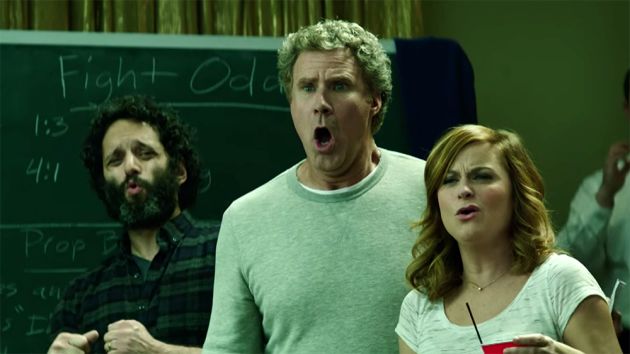
Happily for "The House," the cast is so packed with comedic actors that there is a lot of room for silliness.  Amy Poehler and Will Ferrell play Kate and Scott Johansen, parents who, despite living in a suspiciously nice house in "the tri-state area", have failed to save a cent for their only child's college education. 

That back yard patio sure is nice for a family that is apparently destitute?
They partner up with their friend Frank, played by Jason Mantzoukas, and launch an illegal casino from Frank's home in an effort to quickly generate a college education's worth of cash (plus some extra money so Frank can win back his wife). 


Nick Kroll plays Bob, a scheming city official, with ever-convincing sketchitude.  A host of other recognizable-from-funny-stuff-you've-probably-seen people are featured, including Lennon Parham (from "Veep"), Michaela Watkins (from "Transparent"), Cedric Yarbrough (from "Crazy Ex-Girlfriend"), and Rob Huebel and Andy Buckley (from "The Office").


With such a full house (see what I did there?) of comedic talent, there are not surprisingly some genuine laughs in "The House".  Most of them derive from the genuine fun chemistry between Poehler and Ferrell, who wrangle trying to assume the roles of badass illegal casino owners with increasing adorable goofiness.


That being said, by the latter half of the film, it started to feel more reminiscent of a film like "Masterminds" (2016), where I appreciate that it is a film that exists so I can bemusedly tune out whilst tired from a long work day, but I am also kind of surprised that it is a film that exists because it is so aggressively okay.

Alternatively, consider: "Logan Lucky".


This film features yet another packed cast, including Channing Tatum and Adam Driver as the titular brothers Jimmy and Clyde Logan, Daniel Craig, Katie Holmes, Katherine Waterston (who was maybe the only good thing about "Alien: Covenant" (2017)), David Denman (another "Office" alum), Riley Keough, and an absolutely delightful Farrah Mackenzie playing Jimmy's daughter Sadie. 

We all know I find Channing Tatum to be an absolute goddamn national treasure, but I was concerned about the possibly distracting sullen influence of Adam Driver--only to have my concerns completely dispelled by yet another example of great on-screen chemistry.  In fact, "Logan Lucky" is a hit parade of things I didn't think would work, yet worked exceedingly well.


Included in this list:


--Daniel Craig as a heavily tattooed bomb-engeering prisoner in the deep South.


--A cute and charming (but not TOO cute and charming) daddy-daughter relationship between Jimmy and Sadie.


--A movie about stuff that happens in the South... but is NOT excruciatingly packed with cliché sexism.  There are threatened whiffs of it--mostly perpetrated by Moody Chapman, as portrayed by the basically-always-playing-a-sketchy-character Denman--but Keough's Mellie Logan shuts them down with satisfying deftness.  (I wonder if this might be due to the refreshing influence of the film's presumably female but possibly fictitious(??!) writer, Rebecca Blunt.)

--A heist movie, because, with few exceptions, I normally just can't care less about those.

Honestly, one of the only things that doesn't work is Seth MacFarlane's performance as Max Chilblain, an inexplicably British NASCAR driver?/team owner? with a TERRIBLE-wig-and-moustache-combo and a terrible accent to go match.  It's not as if MacFarlane is known for his nuance, so I guess I shouldn't be surprised that his performance sticks out in what is otherwise a pretty masterfully woven tapestry of characters.

But why.
One aspect of "Logan Lucky" that could not stand in starker contrast to "The House" is the complexity and thoughtfulness of the plot.  Very much like director Steven Soderbergh's "Ocean's Eleven and Other Integers" (2001 - anticipated in 2018), if you blink, you'll miss the tiny details that explain why an intricate heist actually gets pulled off.  However, to me the major turn-off of the integer'd cops and robbers movies is that everyone is so smug, polished, and evidently already doing financially okay.  I don't feel any need to root for sociopaths who are stealing for sport, not need.

This is why, for me at least, "Logan Lucky" works so well.  As you watch Jimmy limp away after being fired from his construction job because his old football injury is a "liability," it's hard not to feel an empathic ache and wish that the brothers could break Clyde's theorized Logan Curse.  Watching them earn the title of their movie, especially with grit and resourcefulness their smoother Ocean's counterparts don't need to rely on, is therefore that much more satisfying.


To add to what is already a pretty great movie, there are lots of great moments of surprise and humor.  I had an audio clip of Jimmy proclaiming, "I looked it up on the Google" in the most entertaining, bouncy Southern drawl for at least a day or two after watching.  Watching all the set pieces coalesce into a pretty remarkable heist is a genuinely fun thrill.

So, while you definitely need to be a bit more alert to fully enjoy "Logan Lucky" compared to "The House", the fight between these two films is pretty unfair.

In conclusion, the scores I gave these two films were:

"The House" (2)
"Logan Lucky" (4.5)

{Heart}

Sunday, April 29, 2018

Snap Judgment: "A Quiet Place"

Hey friends,

It's time for another Snap Judgment!  Let's go!

I'd like to share my thoughts about "A Quiet Place" (2018).


  • The movie explains just enough (almost).

I've noted before that I really appreciate a film that respects the intelligence of its audience, and that by proxy I kind of resent movies that beat us over the head by making explicit information that could have been conveyed with greater subtlety.  I like being trusted to pay attention and make my own deductions from collections of newspaper clippings and scribbled notes tacked to a wall or the chaotic arrangement of detritus in an abandoned street.


"A Quiet Place" risks taking this to somewhat of an extreme place by not working much at all to explain the current state of affairs portrayed in the film.  While we do know how many days have elapsed since the world appears to have irrevocably changed, we have no idea where the sound-hunting creatures that haunt this film came from or what the state of the rest of the world is.  I would have appreciated a little more elaboration on these questions simply to satisfy my curiosity, but overall the intentional lack of back story contributes well to the film's overall sense of out-of-the-blue, world-changing shell shock congealing into bleak new-normal hypervigilant survival mode.

  • But: it has some notable plot holes.

There are nevertheless definitely some aspects of the film that I would argue require more explanation than is offered to avoid stretching the credulity of the audience.  For example: "A Quiet Place" opens in a pharmacy, where the Abbott family hunts for medication because one of their children is ill.  After a jump ahead in time, Evelyn Abbott (played by Emily Blunt) is pregnant.

Just to recap: the Abbott family lives in a world in which making *any sound* will summon terrifying, other-worldly, murderous predators.  You know what infants are really good at?  (Hint: not silence.)

But... but... you just showed us they have access to a pharmacy.  You know what pharmacies have?  SO MANY BIRTH CONTROL METHODS.  More explanation is needed here.

SO MANY.  THERE'S LITERALLY A WHOLE AREA FOR IT.

Here's the thing: there are all sorts of interesting ways of explaining Evelyn's pregnancy.  Without getting into spoilers territory, some include: Maybe they feel obligated to help repopulate the planet?  Maybe this pregnancy is accidental, and the Abbott family is anti-abortion, so they know have to square the impossible world they live in with their beliefs?  Maybe the people-eating creatures don't respond to--or are even bizarrely subdued by--baby-screaming?  (This last one is admittedly highly unlikely.)

With no explanation to go on, this development runs the risk of seeming like a simple conceit upon which to build a movie.  I mean, obviously, it is, but the fact that the movie offers no explanation for it threatens to bump the audience out of the movie.  This seems like a pretty significant oversight that could have been fixed with a few lines of dialogue.

Some other questions that linger unanswered:
--If you can soundproof one part of your house, why not soundproof everything??
--If you can set some noise-producing distractions, why not put them everywhere??
--Why does your son need to learn to fish, but your daughter doesn't??
--Perhaps minor spoilers but: Why IN GOD'S NAME is there a nail there???

  • It has great artistic design.

There are lots of great artistic choices made throughout "A Quiet Place".  The sound-murdering things look great.  They are reminiscent of other classic alien/monsters with some adaptations that make them interesting and new.  The set design and setting pit the horror of the story against a beautiful countryside and a surprisingly homey-feeling farm, capturing an atmosphere that balances feeble attempts to reclaim a now-extinct life against the ever-present existential threat of the present day.

It would be a lot easier to enjoy this nice family outing if it weren't for the terrifying human-killing beasts lurking at every turn.

  • It's competently scary.

Because of this well-constructed contrast, the movie's frequent jump scares are skillfully nestled in an effective atmosphere of stifling creepiness.  Another aspect of this film that I appreciated was that the jump scares aren't cheap fake-outs--when you jump, it's with good reason.

  • And finally, the performances are great.


The cast of "A Quiet Place" does an overall very effective job of breathing the spirit of a genuine family drama into an also very effective horror movie.  It's really interesting to watch the on-screen chemistry between actual spouses Emily Blunt and John Krasinski, who directs and plays husband/father Lee Abbott.  Blunt imbues Evelyn with a particularly potent mix of heartbreak, fear, and resilience.  The Abbott's son Marcus, played by Noah Jupe, compellingly portrays the miserable terror of a child in a living nightmare.


In many ways, however, the film hangs on the performance of Millicent Simmonds, who plays the Abbott's oldest child Regan.  Because Regan is deaf, we can tacitly infer that she is the reason for her family's survival in their current ordeal--if they were not already able to communicate in sign language, they would have a much more difficult path ahead of them.  Simmonds balances the maturity of a young woman trying to carry a burden of grief and guilt against the perils of being a rebellious, angry, and frustrated teenager in what is essentially the apocalypse.

With all these factors considered, I gave "A Quiet Place" a 4.  It's still in theaters--I recommend you check it out!

{Heart}

Sunday, March 25, 2018

On "Pandering"

Hi team,

As you know, I've dedicated space in this blog to celebrating the increasing diversity of American cinema. 

It therefore perhaps comes as no surprise that I prickle when people dismiss movies that center characters who are not members of the dominant classes in America, meaning: anyone who is not white, straight, cis, male, presumed Christian (or at least not not Christian), and able-bodied.  The VAST majority of major American movies center characters who fit into this narrow demographic mold, even though that means excluding all but a minority of the population of this country.

This dismissal can be expressed through outrage, concocted controversies, and even whining over characters being played by actors with traits consistent with how the characters were written. Or it can be more subtle, perhaps packaged in a deeply fraught choice of words.  With a sigh, a furrowed brow, a shrug of the shoulders, or an irritated eye roll, these movies are at times described as "pandering".  I've heard this word used in reference to some of the most visible recent non-white-guy-centering movies, and it strikes me as exceedingly problematic.

Before we dive into what it means to use that word to describe these movies, let's start by defining our terms.  According to Merriam-Webster, the word "pandering" or "to pander" can be defined as:

to act as a pander; especially : to provide gratification for others' desires 
  • films that pander to the basest emotions

to do or provide what someone wants or demands even though it is not proper, good, or reasonable

So from where I'm sitting: hooooooooly shit please tell me it's obvious that using this word to describe movies about people in oppressed minority groups is deeply problematic.  It's obvious, right?

In case it's not, let's unpack what's happening when we use the word "pandering" to describe

"Black Panther" (2018), 

or "Wonder Woman" (2017), 

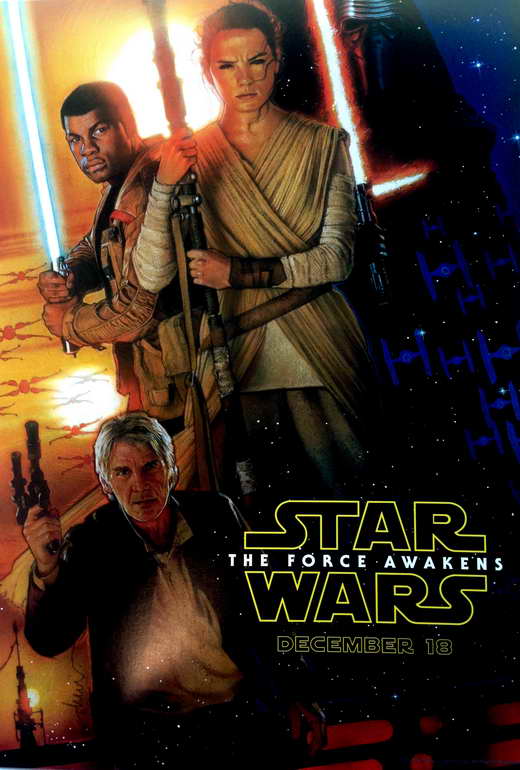
or "Star Wars: The Force Awakens" (2015), 

or any movie that isn't only about white straight dudes.  Let's talk about what's happening if you've ever used that word for one of these films, or one like it.

First off, does that word even apply?

to act as a pander; especially : to provide gratification for others' desires 
  • films that pander to the basest emotions


If we're saying this definition applies, we're implying that these films are created with the goal of gratifying "others' desires".  Well, who do we mean by "others", exactly?  "Wonder Woman", a movie centered around a female heroine, was directed by Patty Jenkins, who is a woman.  "Black Panther", a movie centered around a Black hero, was directed by Ryan Coogler, who is a Black man.  While many people have to cooperate for a movie to get made, if we consider that the person most readily identified as "in charge" of film projects is the director, we can't say that these films were made as a scheme to please "others" who are unlike the people in charge.  We could make the inference that it is the director's, not "others'", desires that are being gratified through these films.  These are movies made by women/Black people and about women/Black people.  Because pandering is by definition about providing for others', not your, desires, the word simply cannot apply in these cases; there are no "others" to be pandered to.

And what do we mean by "gratification of desires", and why is that inherently bad?  By "desires" being "gratified", are we insinuating that these films are only a manipulative ploy to grab at the ticket money of people too dumb to know that they're being "pandered" to?  Because that's pretty bleakly misanthropic.  Could we instead mean that the director's "desire" in these cases is to "for once make a movie that features characters with similar demographic traits to mine"? 

Sidenote: J.J. Abrams directed the white woman and Black man co-starred "Star Wars: The Force Awakens," and he's a white man.  So maybe we could say this definition applies for this film, but I'll address that later.

The exemplar given in that definition—"films that pander to the basest emotions"—I suppose could apply to these movies, if you interpret the simple wish to have someone who looks like you show up as a hero or even at all in movies every once in a while as an expression of profound self-centered narcissism.  But then, since the people calling these movies "pandering" often have similar demographic traits to those of basically EVER MOVIE HERO EVER, aren't you showing a bit of hypocrisy?  After all, you're basically saying, "Hey!  I like it better when literally 100% of the heroes look like me!!"  Who's having the self-centered "base emotions" now?


Now let's look at that second definition:

to do or provide what someone wants or demands even though it is not proper, good, or reasonable

Oof.

So: like many, I see the increasing emergence of diversity in cinema as a signal that our society is progressing by becoming more inclusive, tolerant, and embracing of people who are often overlooked or demeaned.  This is a particularly heartening trend in light of the current political reality in America.  It is also a necessary counterpoint to decades of (and still ongoing) problematic portrayals or erasures of people of color, women, LGBTQ people, members of non-Christian religions, and people of different ability levels and body types in American cinema.  There are so many people—the majority of Americans—waiting and fighting to be uplifted and seen as equal players in this country.

So if we say that diverse casting and stories are "pandering", we are suggesting that striving for more equitable and positive representation for members of oppressed minority groups is improper, bad, and unreasonable.  What worldview would support something so preposterous?

The answer to that question brings us to the real issue at hand: white supremacy and white privilege.

From this excellent Facebook page based on one of my favorite 90s shows!

If you feel a pull to call a non-white-dude-centric film "pandering", that is an expression of the very disconcerting fact that you see anyone not superficially resembling you—because of gender, color, sexual orientation, physical ability, body type, what have you—as less than you. It expresses your failure to see those people as, like you, just people.  It is an indictment of your own lack of ability to recognize the humanity in others who do not look like you. 

That failure might not be in your full, conscious awareness.  It may be in conflict with your values or the kind of person you want to be.  Regardless, in calling these films “pandering”, you are naming your blindness to the humanity of your fellow human beings, and you are participating in their oppression by supporting their continued erasure.  You are saying, in essence, that these films should not be made because they are somehow beneath us.


You are also expressing your privilege. Because odds are, calling a non-white-person-focused movie “pandering” is a not-fully-conscious recognition that you are used to—and prefer—seeing yourself reflected in everything everywhere you go.  This white person's monopoly on representation is comforting, because it reinforces the fact that the world has mostly been organized around your comfort.  It is comforting to constantly be shown evidence the world is about and for you. 

It is therefore uncomfortable to be shown that there are other people.  This means that maybe the world isn’t only about you anymore, and that space is being made for others to also have comfort.  To need to put down those still extraordinarily rare corrective films as “pandering” is an attempt to reclaim 100% of the comfort for yourself.  Well pardon me, but fuck you.

You and me both, Clarissa.

Because here’s the thing: I’m not Black.  There are no white women in “Black Panther”. On a demographic basis, I have no placeholder in the film.  But as a human being, watching that movie made my heart sing with joy.  I know how much intentional positive representation matters, and how far we have yet to go as a nation in creating that for everyone.  In "Black Panther", I saw a critical step in that corrective process.  I saw my fellow human beings being celebrated.  I could imagine the uplifting force of that movie for thousands upon thousands of my Black fellow human beings.  I could see its capacity to heal and empower after generations of oppression.  How could I not gratefully embrace this film?

And how could I not speak up when I hear it dismissed?

Seriously, look at these children’s faces as they watch "Black Panther".  Listen to their reactions to that movie.


Look, listen, and ask yourself: Are those the faces of children who are being “pandered” to? 

You would say that movie shouldn't have been made?  You would deny those children the chance to see themselves as powerful, valuable, capable, and as deserving of our attention—yes, your attention?

A movie does not need to be about me or you to be a source of exhilaration, inspiration, and happiness.  We can recognize that a rising tide of inclusion uplifts us all—and that we cannot be free while any one of us is unfree.  We can see the good, communal value in another person’s story.  We can have gratitude for being given a seat at the table where others’ stories are told.

There’s a seat for you, too.

If you don’t take it, your loss—of the opportunity to expand your curiosity about, compassion for, and experience of the common humanity of your fellow human beings.

I sincerely hope you join us.

{Heart}

Sunday, March 11, 2018

Congratulations Jordan Peele!!

Hi everyone,

I want to wish a deeply heartfelt CONGRATULATIONS to Jordan Peele for a much-deserved, historic Oscar win for best original screenplay for "Get Out"!


If you weren't able to catch his acceptance speech, you can watch it here (with a backing track of Laverne Cox's enthusiastic response because she and everyone else were so excited about this win!).  Make sure you catch Mr. Peele's wonderfully astonished reaction as he leaves the stage!

Mr. Peele with his long-time collaborator, Keegan-Michael Key.
Mr. Peele is the fourth African American to be nominated in the category of best original screenplay.  (Sidenote: HOW did Spike Lee not win for "Do the Right Thing" (1989)???!)  Together with other encouraging developments in the recent Academy Awards ceremonies, let's hope this signals a more consistent uplifting of the art and talents of people of color in the film industry.

Hurray!

{Heart}